
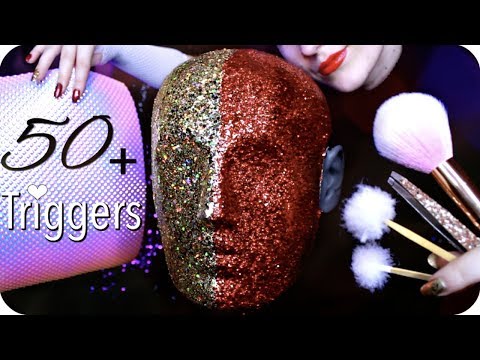

White noise and ASMR do different jobs. White, pink and brown noise are steady, featureless sounds that can cover up traffic or a snoring partner. ASMR is a person making quiet, deliberate sounds, often for you, and its appeal is that it relaxes you and gives your mind something gentle to follow.
Neither is a proven sleep aid, and the research on noise is more mixed than sound-machine marketing suggests. Here's what each one is, what the studies show, how loud is too loud, and how to choose.
White, pink and brown noise: what's the difference?
The "colors" describe how a sound's energy is spread across low and high pitches (Cleveland Clinic):
| Noise | What it contains | What it sounds like |
|---|---|---|
| White noise | All the frequencies people can hear | Busy, hissing static, like an untuned radio |
| Pink noise | A softer version, with more weight on low frequencies | Steady rain, ocean waves |
| Brown noise | The most weight on low frequencies | A deep rumble: a waterfall, heavy rain, distant thunder |
All three are steady. Nothing in them changes from one minute to the next, which is the point: there's nothing to listen to.
Does white noise help you sleep?
Less clearly than you might think. A 2021 systematic review pulled together 38 studies on continuous noise and sleep. The results were inconsistent: in some studies noise improved sleep, in others it disrupted it. Using standard grading criteria, the authors rated the evidence that continuous noise improves sleep as "very low" and warned that it could also harm sleep and hearing (Riedy et al., 2021).
That doesn't mean a fan or a white noise app can't help you. It means the benefit hasn't been shown in good studies, and it may depend on your situation. The usual reason to use it is masking: a steady background sound can make sudden noises, like a door or a car, stand out less.
Pink noise and deep sleep: what the studies show
Pink noise gets a lot of attention for "boosting deep sleep." The real research is narrower than the headlines.
The studies behind the hype
In a 2017 study, 13 older adults slept in a lab while a system tracked their brain waves and played very short bursts of pink noise, timed to line up with their deep-sleep waves. After the stimulation night, their overnight memory improvement on a word test was 26.8%, versus 5.7% after a sham night (Papalambros et al., 2017).
That's interesting, but it isn't what a sleep app does. The pink noise came in 50-millisecond pulses precisely timed by a brain-monitoring system, not as a continuous sound all night. The study was small and lasted one night, and overall deep-sleep activity across the night didn't change.
A 2026 study on all-night pink noise
Continuous pink noise has now been tested directly. In a 2026 Penn Medicine study, 25 healthy adults aged 21 to 41 slept in a lab for seven nights under different conditions (Penn Almanac, 2026):
- Pink noise alone, at 50 decibels, cut REM sleep by nearly 19 minutes a night.
- Aircraft noise cut the deepest sleep stage (N3) by about 23 minutes.
- Pink noise on top of aircraft noise shortened both deep and REM sleep, and added about 15 minutes of time awake.
- Earplugs prevented most of the deep-sleep loss from aircraft noise.
With aircraft or pink noise, people also felt their sleep was lighter and rated it as worse. The lead author warned that pink and other broadband noise during sleep could be harmful, especially for children, who spend more time in REM sleep than adults (Penn Today, 2026).
It's one lab study in people who didn't normally sleep with noise, so it isn't the final word. But it's a reason not to assume that more noise means better sleep.
What about brown noise?
Brown noise is popular online, but there's very little research on it specifically. A psychiatrist interviewed by Cleveland Clinic put its popularity down largely to social media testimonials and said it's too soon to tell how helpful it is.
How loud is too loud?
Volume matters more than color. Sounds at or below 70 dBA are unlikely to cause hearing loss even after long exposure, while long or repeated exposure at 85 dBA or more can (NIDCD). Everyday conversation is about 60 to 70 dBA, and headphones at maximum volume can reach 94 to 110 dBA.
Sound machines can be louder than you'd guess. When researchers tested 14 infant sleep machines at maximum volume, all of them exceeded 50 dBA, the recommended noise limit for hospital nurseries, at 30 cm, and three exceeded 85 dBA (Hugh et al., 2014). The advice that followed for parents: place the machine well away from the crib, more than 200 cm, and keep the volume low (Children's Hospital of Philadelphia).
For adults, the same logic applies. Cleveland Clinic advises keeping noise low, setting a timer at bedtime and avoiding playing it all night (Cleveland Clinic).
How ASMR is different
ASMR (autonomous sensory meridian response) is a relaxing, often tingly feeling some people get from soft, deliberate sounds such as whispering, tapping or brushing. The difference from white noise comes down to three things.
- There's a person behind it. ASMR is made by someone, often speaking or acting as if you were in the room. Personal attention was one of the most common triggers in the first peer-reviewed ASMR survey, named by 69% of participants (Barratt & Davis, 2015).
- It has detail. Taps, brush strokes and whispers change from moment to moment. That gives a racing mind something gentle to focus on, but it also means ASMR is less "invisible" than steady noise.
- It's about how you feel, not what you hear. In the same survey, 98% said they watched to relax and 82% to help them sleep. In a lab study, people who experience ASMR had their heart rate drop by about 3.4 beats per minute while watching ASMR videos, and reported feeling calmer, along with signs of mild arousal (Poerio et al., 2018).
ASMR research is early too: mostly surveys and small lab studies, with no solid trials showing it treats insomnia. Not everyone experiences ASMR, and some sounds (mouth sounds, for example) bother some people rather than relax them.
White noise vs ASMR: which should you pick?
| Your situation | Better pick |
|---|---|
| Street noise, a snoring partner, a noisy building | Steady noise, or earplugs |
| A busy mind that replays the day | ASMR (soft-spoken or slow no-talking) |
| You find voices distracting | No-talking ASMR or a rain soundscape |
| You feel wound up or alone at night | Soft-spoken or personal-attention ASMR |
| You want something you'll stop noticing | Steady noise or rain |
| You share a room with a baby | Keep any machine far away and quiet, or skip it |
Still not sure? Start with the gentlest option that solves your actual problem. If the problem is noise, the Penn study suggests earplugs are worth trying before adding more sound.
The middle ground: rain, soundscapes and no-talking ASMR
You don't have to choose one side. Rain, fireplace and room-ambience recordings sit between white noise and ASMR: steady enough to fade into the background, natural enough not to sound like static.
No-talking ASMR is the next step: slow tapping, brushing or page turning with no voice. It has a bit more detail than rain, without words to follow.
If you want something that runs while you fall asleep and is still there if you wake up, look for videos that last 3 hours or more. Long videos also avoid the click, silence or loud autoplay at the end of a short clip.
For a type-by-type guide, from whispering to personal attention, see the best ASMR for sleep.
How to use either one safely tonight
- Pick the sound before bed, then put the screen face down. The CDC recommends turning devices off at least 30 minutes before bedtime, so treat your phone as a speaker, not a screen.
- Set the volume low, well under conversation level, before you lie down.
- Use a speaker across the room rather than one by your head, if you sleep alone.
- Set a sleep timer so nothing plays all night unless you've decided it should.
- Give it a few nights, then drop it if you're not sleeping better or feel more tired.
Tingly Room is a free video finder that sorts public YouTube ASMR videos by trigger, voice, pace and length, so you can pick a quiet, long video in a minute. It has no ads of its own and no third-party trackers, and videos play in YouTube's official player.
When sound isn't the problem
If you've had trouble sleeping at least three nights a week for three months, no sound will fix it alone. That's the definition of chronic insomnia, and the American College of Physicians recommends cognitive behavioral therapy for insomnia (CBT-I) as the first treatment (ACP, 2016). If you keep waking in the night, our guide on what to do when you can't sleep covers the steps that help.


