
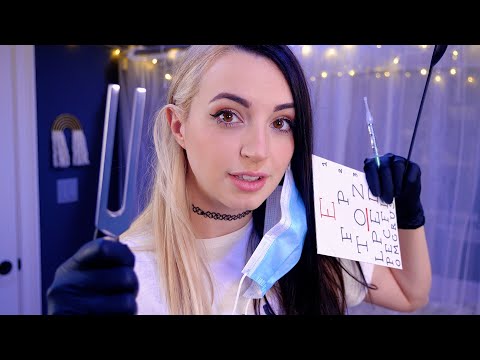
ASMR is not a treatment for addiction, and no published study has tested it for withdrawal or cravings. What the research does show is that quitting a substance often wrecks your sleep and raises your stress, and that stress and bad sleep both make relapse more likely.
That's where ASMR may have a modest role: as a calm, free, always-available way to wind down at night, next to the things that are proven to help. This guide explains the stress, craving and sleep loop, what withdrawal looks like for cannabis, alcohol, nicotine and phone habits, and how to build an evening routine that works for you.
If you need help now: the SAMHSA National Helpline is free, confidential and open 24/7, 365 days a year, in English and Spanish. Call 1-800-662-HELP (4357) for treatment referrals and information (SAMHSA). If you're in crisis or thinking about harming yourself, call or text 988.
The stress, craving and sleep loop in recovery
Recovery isn't only about getting through the first few days. Three things tend to feed each other for weeks or months: stress, cravings and poor sleep.
Stress makes cravings stronger
Researchers have long known that stress raises the risk of going back to drinking. In studies by Rajita Sinha at Yale, people in alcohol treatment who reported stronger cravings when exposed to stress were more likely to drink after leaving treatment, and drank on more days during the 90-day follow-up (Sinha, Alcohol Research: Current Reviews). High stress- and cue-triggered cravings also predicted a shorter time to relapse.
In the same work, people in early recovery stayed more stressed and kept craving longer after a stressful scene than social drinkers did. That points to a real, physical difficulty in calming down, not a lack of willpower.
Withdrawal disrupts sleep
Insomnia shows up as a withdrawal symptom across substances. In a review from the University of Michigan, Kirk Brower and Brian Perron point out that sleep problems are listed in all six withdrawal disorders described in the DSM-IV, psychiatry's diagnostic manual at the time, and that they can last for months to years after someone stops (Brower & Perron, 2010).
Poor sleep feeds stress and relapse
Bad sleep makes it harder to manage your emotions. The National Institute on Alcohol Abuse and Alcoholism (NIAAA) describes how broken sleep, insomnia and poor sleep quality during alcohol withdrawal impair emotional regulation and add to the distress of early recovery (NIAAA, 2023).
Brower and Perron proposed that sleep problems may raise relapse risk for many substances. The evidence is strongest for alcohol, where several studies linked trouble falling asleep with relapse. For other substances it's thinner, and the authors note that treating insomnia hasn't yet been shown to prevent relapse (Brower & Perron, 2010).
So the loop looks like this: withdrawal hurts your sleep, poor sleep makes stress harder to handle, and stress makes cravings louder. Evenings are often the pinch point, because you're tired and certain times of day can act as triggers (NIAAA Rethinking Drinking).
What withdrawal looks like, substance by substance
Withdrawal is different for every substance, and the safety picture is very different too. Here's a short overview of each, with a link to a full guide.
Cannabis (weed)
Cannabis withdrawal is real and common. A 2020 meta-analysis of studies covering more than 23,000 people found that about 47% of people who used cannabis regularly or were dependent on it had withdrawal symptoms (Bahji et al., 2020).
- Typical symptoms: irritability, anxiety, restlessness, low appetite, low mood, insomnia and disturbing dreams (Cleveland Clinic).
- Timeline: usually starts within 24 to 48 hours, peaks around day three and lasts up to two weeks, sometimes three weeks or more for very frequent users (Cleveland Clinic). Sleep problems can be the longest-lasting symptom, up to about 45 days in some studies (Babson et al., 2017).
- Safety: symptoms are uncomfortable but not life-threatening. If you also use alcohol, opioids or benzodiazepines, get medical advice, because withdrawal from those can be dangerous (Cleveland Clinic).
Full guide: how to sleep without weed.
Alcohol
Alcohol withdrawal can be dangerous. If you drink heavily every day, don't stop suddenly on your own: talk to a doctor first.
- Typical symptoms: anxiety, shakiness, sweating, headache, nausea, a fast heart rate and trouble sleeping (MedlinePlus).
- Timeline: symptoms usually start within 8 hours of the last drink, peak at 24 to 72 hours and can go on for weeks. Sleep changes, mood swings and fatigue can last for months (MedlinePlus).
- Safety: the most severe form, delirium tremens (DTs), usually starts 48 to 96 hours after the last drink and can cause severe confusion, hallucinations, fever and seizures. Seizures are most common in the first 12 to 48 hours. People at higher risk include those who have drunk heavily every day for several months or have had withdrawal before. DTs are a medical emergency: call 911 or go to the ER (MedlinePlus).
Full guide: sleep after quitting alcohol.
Nicotine and vaping
- Typical symptoms: irritability, restlessness, headaches, low mood, anxiety, fatigue, trouble concentrating, sleep problems, more hunger and strong cravings (Smokefree.gov).
- Timeline: the worst symptoms last a few days to a couple of weeks (Smokefree.gov). Withdrawal is strongest in the first week, which is also when relapse risk is highest, and a single craving usually lasts 15 to 20 minutes (American Thoracic Society).
- Support: free coaching at 1-800-QUIT-NOW (1-800-784-8669), or text QUIT to 47848 for SmokefreeTXT (Smokefree.gov). Ask a doctor about medications that ease withdrawal.
Full guide: how to handle vape cravings.
Phone and doomscrolling
Doomscrolling is a habit rather than a drug, but it runs on a similar loop of stress, checking and lost sleep. Researchers at the University of Florida found that it's more than wanting to stay informed: it's tied to fear of missing out and constant phone connection. They couldn't say whether doomscrolling causes anxiety or the other way around, and think the two likely feed each other. Men and younger people were more likely to doomscroll (University of Florida, 2022).
It costs sleep, too. In a 2025 survey of 2,007 US adults by the American Academy of Sleep Medicine, 38% said reading news on their phone before bed made their sleep worse, rising to 46% of adults aged 18 to 24 (AASM).
Full guide: how to stop doomscrolling.
What actually helps in recovery
ASMR comes last on this list for a reason. These are the supports with real evidence behind them.
Professional treatment and support
Treatment works, and a good place to start is your doctor or the SAMHSA National Helpline (1-800-662-4357). For alcohol, NIAAA's free Alcohol Treatment Navigator walks you through how to find higher-quality care, without endorsing specific programs (NIAAA).
Mindfulness-based relapse prevention
Mindfulness has some of the best evidence among the "calm your mind" approaches. In a randomized trial of 286 adults who had finished initial treatment for substance use, Sarah Bowen and colleagues compared mindfulness-based relapse prevention (MBRP), standard relapse prevention and usual care (Bowen et al., 2014).
At 6 months, both relapse prevention programs beat usual care for staying off drugs and avoiding heavy drinking. At 12 months, people in the mindfulness group who did use drugs reported 31% fewer days of drug use than those in standard relapse prevention, and were more likely to avoid heavy drinking altogether. MBRP sessions included 20 to 30 minutes of guided meditation and practice with triggers and cravings.
Riding out cravings
A simple skill from NIAAA: instead of fighting an urge, accept it as normal and temporary, and let it build and pass like a wave (NIAAA Rethinking Drinking). This idea is often called urge surfing. NIAAA also suggests having a list of short, medium and longer activities ready, from texting a friend to lifting weights, taking a shower or watching short online videos.
Treating insomnia
If sleep problems last, the American College of Physicians recommends cognitive behavioral therapy for insomnia (CBT-I) as the first treatment for chronic insomnia, ahead of sleeping pills (ACP, 2016). Chronic insomnia means trouble sleeping at least three nights a week for at least three months. In recovery, talk to your doctor before taking any sleep medication.
Where ASMR fits, honestly
ASMR is not mindfulness-based relapse prevention, and it isn't therapy. Nobody has studied whether it helps people quit anything. What we do know is narrower: in the first large survey of people who watch ASMR, 98% said they used it to relax, 82% to help them sleep and 70% to deal with stress (Barratt & Davis, 2015). That was a self-selected group of fans with no control group, so it shows how people use ASMR, not that it works.
Given that, here's the fair case for trying it in recovery:
- It's a calm, low-stakes way to fill the evening. The hours you used to spend drinking, smoking or scrolling need something in them. A quiet video is one option among several.
- It's free and always there. At 2 a.m., when nobody's awake to call, it's available.
- It can anchor a wind-down routine. The same video style, at the same time, can become a cue that the day is over.
- It pairs well with breathing or mindfulness. Some people find it easier to focus on soft, repetitive sounds than on silence.
And the limits:
- It doesn't reduce cravings in any study. If cravings are strong, use your plan, call someone or call a helpline.
- It's still on a screen. If phone use is part of your problem, pick your video before bed and listen with the screen face down.
- It's not for everyone. Not everyone feels tingles, and some sounds irritate people.
If you want to explore, the no-talking ASMR collection is a good start for a tired brain, and the sleep ASMR page gathers slower, quieter videos for bedtime.
Build your evening routine
Use this as a template and adjust it to your life. If you're in treatment, share it with your counselor or doctor.
1. Name your evening trigger time
Write down when cravings usually hit: after work, after dinner, the hour before bed. Times of day can be triggers, so plan for them (NIAAA Rethinking Drinking).
2. Plan a replacement for that hour
Choose something specific: a walk, a workout, a shower, cooking, a call with a friend, a meeting. Have a short option (5 minutes), a medium one (30 minutes) and a longer one.
3. Set a screens-down time
The American Academy of Sleep Medicine suggests putting handheld devices away 30 to 60 minutes before bed, keeping your phone out of the bedroom if you can, and turning off notifications if it has to stay (AASM).
4. Pick your audio before screens-down
If you use ASMR, choose a long, slow video while you're still up, set a sleep timer and turn off autoplay. Then put the phone face down and treat it as audio only.
5. Do a few minutes of slow breathing
Breathe in through your nose and out through your mouth, slowly, about 10 times, a technique Smokefree.gov recommends for cravings (Smokefree.gov). Let your attention settle on the sounds.
6. If a craving hits, ride it out
Notice it, name it, and let it pass like a wave. If it doesn't pass, use your plan: text someone, get up and move, or call a helpline.
7. Keep the same wake time
Get up at the same time every day, weekends included, and go to bed when you feel sleepy (AASM). That's the backbone of better sleep while your body readjusts.
When to get help
A slip isn't a failure, and asking for help is part of recovery. Reach out to a doctor or treatment provider if:
- You drink heavily every day and want to stop. Don't quit suddenly without medical advice.
- You notice shaking, confusion, hallucinations, fever or a seizure after stopping alcohol. Call 911.
- Withdrawal symptoms are severe, or you also use other substances.
- Insomnia lasts more than a few weeks, or you can't cope during the day.
- Your mood is very low or you're thinking about harming yourself. Call or text 988.
For free, confidential treatment referrals any time, call the SAMHSA National Helpline at 1-800-662-HELP (4357) (SAMHSA).