
ASMR can make you feel less lonely for a while. Personal attention videos, soft-spoken talk and gentle roleplays are filmed as if one calm person is sitting close and speaking only to you, and for many viewers that feels like company.
The research is thin, though. A few interview studies and surveys link ASMR to loneliness, but no controlled trial shows it lowers loneliness over weeks or months. It can comfort you. It can't replace people who know you and answer back.
If loneliness has turned into something heavier, you don't need a crisis to reach out: the 988 Suicide & Crisis Lifeline (call or text 988, or chat at 988lifeline.org) supports people dealing with loneliness and emotional distress, 24/7 (SAMHSA).
Why ASMR can feel like company
Most ASMR isn't just sounds. A large share of it is staged as a one-on-one moment.
It's filmed as a close, one-on-one moment
Researchers at Clark University analyzed thousands of YouTube ASMR videos. Close-up shots were the most common framing, whispering was the most common sound, and about 69% of videos talked to or with the viewer. Face-to-face framing appeared in about two-thirds of videos (Niu et al., 2022).
They found that combining whispering, face-to-face framing and reaching toward the camera strengthened viewers' sense of social attraction, and they named "social connection" as one of the three main experiences ASMR offers.
Viewers ask for exactly this. In the first big survey of people who experience ASMR, whispering (75%) and personal attention (69%) were the two most common triggers (Barratt & Davis, 2015).
Your brain may respond a bit like it does to care
In a small brain-imaging study of 10 people who experience ASMR, tingles came with activity in reward areas and in the medial prefrontal cortex. The authors noted these regions overlap with those seen in studies of affiliation and bonding, and suggested ASMR may tap into systems linked to caring, grooming-like contact (Lochte et al., 2018).
That's a hypothesis from a pilot study with no control video, not proof. But it fits what viewers describe.
People use media as a stand-in for company
This isn't unique to ASMR. In a set of four studies, psychologists at the University at Buffalo found that students turned to favorite TV shows when lonely, felt less lonely while watching, and reported fewer feelings of rejection after thinking about those shows. They called it the "social surrogacy" effect (University at Buffalo, 2009).
A soft voice that speaks to you directly is a very intimate kind of media. Researchers have described ASMR as "digitally mediated intimacy": closeness delivered through a screen and headphones (Smith & Snider, 2019).
What the research says about ASMR and loneliness
There isn't much, and none of it is a clinical trial.
- Interviews. A 2022 qualitative study interviewed six regular ASMR viewers in depth. Loneliness came up in most interviews, and it was one of the reasons people found ASMR in the first place. All six described a comfortable, "tailored" kind of intimacy, and several stressed the feeling of being singled out by the creator (Trenholm-Jensen et al., 2022).
- A survey experiment. A 2021 master's thesis in South Korea (452 participants, not a peer-reviewed journal article) found that lonelier viewers were more motivated to watch ASMR to relax and to manage their relationships (Lee, 2021).
What's missing: nobody has tested whether watching ASMR regularly makes people less lonely, or more, over time. The honest summary is that lonely people often reach for ASMR and say it comforts them. Whether it changes loneliness itself is unknown.
Comfort, not a replacement
Loneliness is common and it matters for health. About half of US adults report experiencing it, with some of the highest rates among young adults. The US Surgeon General's 2023 advisory says a lack of social connection can raise the risk of early death about as much as smoking up to 15 cigarettes a day, and it's linked to heart disease, stroke, depression and anxiety (US Surgeon General, 2023).
One-sided bonds with creators, characters or celebrities can ease loneliness and give a sense of belonging. Harvard Health Publishing warns that leaning on them too heavily may deepen isolation, and that they become a problem when they crowd out real relationships, for example when you pick a show over time with friends (Harvard Health, 2024).
The Buffalo researchers made the same point: turning away from family and friends in favor of a screen may backfire over time (University at Buffalo, 2009).
So the useful way to think about ASMR is as a warm room to rest in, not a place to live. It can help you get through a quiet evening or fall asleep without feeling alone. It doesn't ask how your week went, and it won't notice if you stop showing up.
Best ASMR styles when you feel lonely
These formats lean most on the feeling of someone being there. Triggers are personal, so try a few.
Personal attention
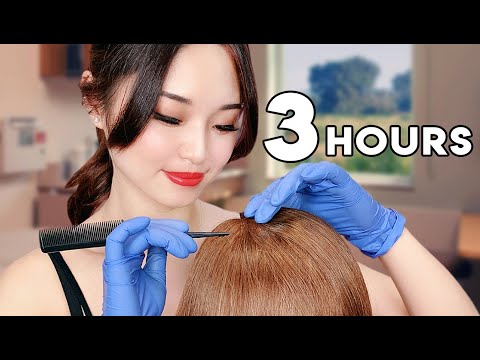
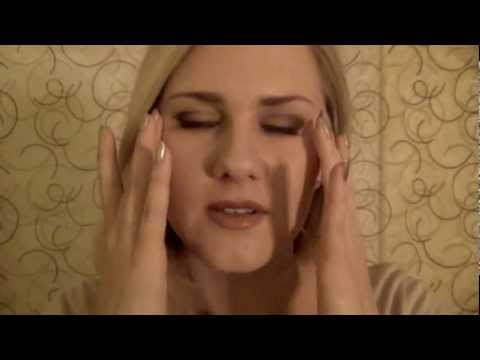
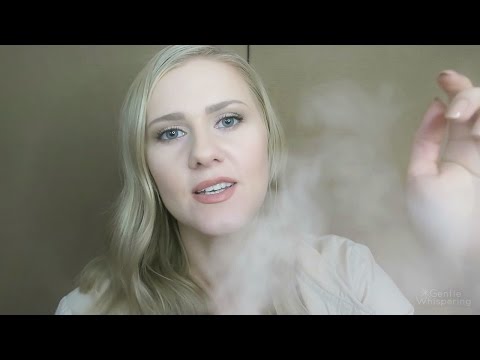
The creator looks into the camera, speaks to you and acts as if they're tending to you: checking in, adjusting a light, doing a slow face or hair attention scene. Browse personal attention ASMR.
Friend and everyday roleplays
A friend keeping you company while you study, a neighbor dropping by, someone helping you get ready for the day. Low stakes, familiar, easy to settle into. See friend roleplay ASMR.
Affirmations and reassurance
Calm, kind statements: you did enough today, it's okay to rest, you're not a burden. Some people find these grounding after a rough day; others find them too much. Browse affirmations ASMR.
Soft-spoken talk
A real conversation pace in a quiet voice: rambles, life updates, reading aloud. If close whispering feels intense, soft-spoken ASMR sounds more like a person in the room.
How to use ASMR well when you're lonely
- Give it a job. Use it for a specific moment: the hour before sleep, a quiet Sunday night, after a hard day. That keeps it a comfort instead of a default.
- Pick calm over intense. Everyday, friendly scenes and soft-spoken talk tend to leave you settled. If a video leaves you feeling emptier when it ends, switch styles or try no-talking sounds.
- Set a timer. A sleep timer or a planned end stops one video from rolling into three hours of autoplay.
- Check in with yourself afterward. Calmer and ready for bed is a good sign. More alone, or avoiding a text you meant to send, is a signal to change something.
- Pair it with one real contact. Let tonight's video be the comfort, and tomorrow's message to a friend be the connection.
- Remember who's on the other side. Creators are real people making something kind for a big audience. Enjoy it, without spending money or time you can't afford to keep the feeling going.
Small steps toward real connection
The Surgeon General's advice for individuals is practical (US Surgeon General):
- Spend regular, good-quality time with people you already know.
- Join a group built around something you do: a gym class, a league, a hobby club, a volunteer crew, a faith community.
- Help someone, whether a coworker, a neighbor or a stranger.
- Cut back on what disconnects you, such as excessive social media.
- Tell your doctor about big social changes, like a move, a breakup or a loss.
The advisory's own examples are small on purpose: answer when a friend calls, share a meal, listen without your phone in your hand (US Surgeon General, 2023).
Friendships also take time. A University of Kansas study estimated it takes about 50 hours together to go from acquaintance to casual friend, about 90 hours to become friends, and over 200 hours to become close friends. Hanging out, joking around and playing games counted for more than working side by side (University of Kansas, 2018).
That's slow, which is exactly why a comfort like ASMR can help in the meantime. For the bigger picture on why so many people feel this way, read why so many young adults feel lonely.
When to get help
Loneliness isn't a disorder, but it can feed into depression and anxiety. Adults who often feel lonely have more than double the odds of developing depression (US Surgeon General, 2023).
Talk to a doctor or a mental health professional if:
- You've felt lonely or low most days for weeks.
- You've lost interest in things you used to enjoy, or you're sleeping much more or less than usual.
- You're pulling away from people even when they reach out.
If you're in crisis or thinking about harming yourself, call or text 988 to reach the 988 Suicide & Crisis Lifeline, or chat at 988lifeline.org. It's free, available 24/7, and also there if you just need someone to talk to. Veterans can call 988 and press 1 (SAMHSA).
On Tingly Room you can filter by mood, voice and format, or try the swipe feed on Explore. It's free, with no ads of its own and no third-party trackers, and videos play in YouTube's official player, so views count for the creator.