

The key to relaxing after work is mental detachment: not just leaving the job, but stopping thinking about it. Recovery research consistently links that kind of switching off with less fatigue, and the most reliable ways to get there are simple: a clear end to the workday, a boundary around email, some movement, time outdoors and an evening that includes both rest and something you enjoy doing.
Below are ten ways to switch off, a 20-minute routine you can use tonight, and where ASMR fits if you need help quieting your head.
Why it's so hard to switch off after work
Your body leaves work hours before your mind does. You replay a meeting on the drive home, check email on the couch, and go to bed still thinking about tomorrow.
Organizational psychologists who study this call it recovery: the process of getting back to baseline after the strain of a workday. Work psychologists Sonnentag and Fritz identified four experiences during time off that help it happen (Sonnentag & Fritz, 2007):
| Recovery experience | What it means in practice |
|---|---|
| Psychological detachment | Not doing or thinking about work |
| Relaxation | Low-effort, calming activities |
| Mastery | Something absorbing that challenges you or teaches you something |
| Control | Choosing for yourself how you spend your evening |
A 2018 meta-analysis of 54 samples (more than 26,000 people) found that detachment had the strongest link with lower fatigue, while a sense of control had the strongest link with feeling energetic (Bennett, Bakker & Field, 2018). A 2022 review of the field concluded that recovering from everyday work matters for well-being, motivation and job performance, and that training programs can improve how well people recover (Sonnentag, Cheng & Parker, 2022).
In other words, unwinding is a skill. The ten steps below are built around those four experiences.
10 ways to relax after work
1. End the workday on purpose
Most people don't stop working; they just drift off it. Pick a clear last step instead: write down where you left off and the first thing you'll do tomorrow, close every tab, and shut the laptop.
Getting open loops out of your head and onto paper is a simple way to make detachment easier: the job is parked until morning.
2. Set a boundary around email and messages
The American Psychological Association recommends setting limits between work and home, such as not checking work email in the evening or answering calls at dinner, and turning off your phone when you can (APA).
If you can't go fully offline, narrow it: one quick check at a set time, then notifications off. Every glance at your inbox pulls you back into work mode.
3. Build a transition between work and home
A commute used to do this job for many people. If you work from home, or your drive is just more phone calls, create a replacement: a 10-minute walk, changing clothes, a shower, or a specific playlist or audio you only use after work.
The point is a recognizable signal that the workday is over.
4. Move your body
Exercise works on stress quickly. According to the federal Physical Activity Guidelines, a single session of activity can lower anxiety and blood pressure and improve sleep quality that night (ODPHP).
It doesn't have to be a workout. A brisk walk, a few sets in the garage, shooting hoops or a bike ride all count. Over the week, adults should aim for 150 to 300 minutes of moderate activity plus muscle strengthening on two days (ODPHP).
5. Get outside for 20 minutes
In a University of Michigan study, 36 city residents spent time in a nature setting of their choosing, at least three times a week for eight weeks, without phones, social media or conversation. Their stress hormone cortisol dropped by an extra 21.3% per hour beyond its normal daily decline, and the biggest return for the time spent came at 20 to 30 minutes of sitting or walking (Hunter, Gillespie & Chen, 2019).
A large survey of nearly 20,000 people in England found that those who spent at least two hours a week in nature, in one go or spread out, reported better health and well-being than those who spent none (White et al., 2019, via ScienceDaily). It's an association, not proof, and most of those visits were within a couple of miles of home, so a local park counts.
6. Do one deliberately calm thing
Relaxation is its own recovery experience, separate from just not working. The APA suggests a few minutes a day of meditation, deep breathing or mindfulness (APA).
A simple version: sit down, breathe in through your nose for a count of four, out slowly for a count of six, and repeat for five minutes. If you want more options, our guide on how to reduce stress covers breathing techniques in detail.
7. Use calming audio, like ASMR
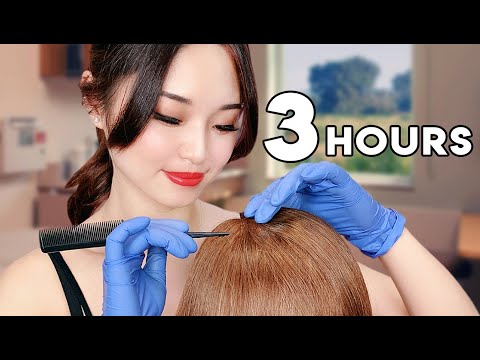
If sitting in silence just lets work thoughts back in, give your mind something gentle to follow. That's where ASMR fits: soft, deliberate sounds or a quiet voice that occupy your attention without asking anything of you.
The research is early, but encouraging. In a lab study, people who experience ASMR had their heart rate drop by an average of about 3.4 beats per minute while watching ASMR videos, and they reported feeling calmer (Poerio et al., 2018). In the first big survey of ASMR viewers, 98% said they watched to relax and 70% to deal with stress (Barratt & Davis, 2015). Those were people who already liked ASMR, and not everyone responds to it.
Two styles suit the after-work slot:
- Relaxing ASMR: slow tapping, brushing, rain, page turning. Good for switching your brain to a lower gear.
- Storytelling ASMR: a soft voice reading or telling a story. Following a story leaves little room for replaying your day, which makes it a form of detachment as well as relaxation.
8. Do something that absorbs you
Mastery sounds like a strange thing to want after a long day, but an evening of pure rest isn't always the most restoring. Something that takes a bit of effort and full attention, like cooking a real meal, a sport, an instrument, fixing something, a class or a hard game, pulls your mind off work in a way scrolling doesn't.
Pick something that's challenging in a different way from your job. If you're on screens all day, make it physical.
9. Take back control of your evening
Control was the recovery experience most linked with feeling energetic in the 2018 meta-analysis (Bennett et al., 2018). After a day of other people's priorities, decide for yourself what the evening is for.
That might mean saying no to plans when you need a quiet night, or yes when you need people. The APA also recommends leaning on friends and family and using employer resources like an employee assistance program when stress builds up (APA).
10. Go easy on the after-work drink
A beer after work feels like the classic way to unwind, and the APA lists drinking among the unhealthy ways people respond to work stress, alongside overeating and smoking (APA).
Alcohol may help you nod off, but it fragments sleep: brief awakenings pull you into lighter sleep and cut into REM sleep, which matters for mood and feeling rested. Cleveland Clinic advises stopping at least three hours before bed and drinking with dinner rather than as a nightcap (Cleveland Clinic, 2025). A worse night makes tomorrow's stress harder to handle, so a drink you rely on to relax can quietly work against you.
If you notice you need a drink to switch off most nights, that's worth paying attention to. A walk, a shower or 20 minutes of calming audio can fill the same slot.
A 20-minute routine to switch off after work
Use this as soon as you get home, or right after you close the laptop.
- Minutes 0 to 3: Close the day. Write tomorrow's first task and anything still on your mind. Close work apps and silence notifications.
- Minutes 3 to 13: Move or step outside. A brisk walk around the block is ideal; it gives you movement, daylight and nature at once. Leave the phone in your pocket.
- Minutes 13 to 15: Change your setting. Change clothes, wash your face or take a quick shower. Small physical signals tell your brain the shift is over.
- Minutes 15 to 20: Wind down. Sit or lie down somewhere comfortable, put on a relaxing ASMR video or a soft-spoken story, put the screen face down, and breathe slowly with longer exhales.
Then do something you chose: dinner with someone, a hobby, a game. Repeat the same routine for a couple of weeks so it becomes automatic.
What if you still can't switch off?
Some weeks, no routine is enough. If you're exhausted every evening and dreading the morning for weeks on end, it may be more than a few hard days. Our guide to burnout recovery covers the signs and what helps.
If work thoughts keep you awake, deal with them earlier in the evening rather than in bed. Our guide on how to stop overthinking at night has a step-by-step plan.
The APA suggests talking to your supervisor about what's causing the stress, and considering a psychologist if it doesn't let up (APA). See a doctor or mental health professional if stress is affecting your sleep, health or relationships for weeks.
If you're in crisis or thinking about harming yourself, call or text 988 to reach the 988 Suicide & Crisis Lifeline (US), or chat at 988lifeline.org. If someone's life is in danger, call 911 (NIMH).